Industries
Biopharmaceuticals

Biopharmaceuticals

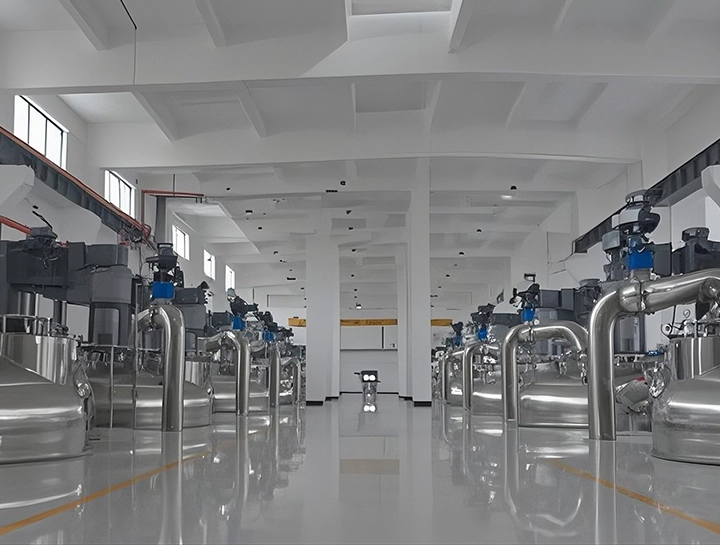
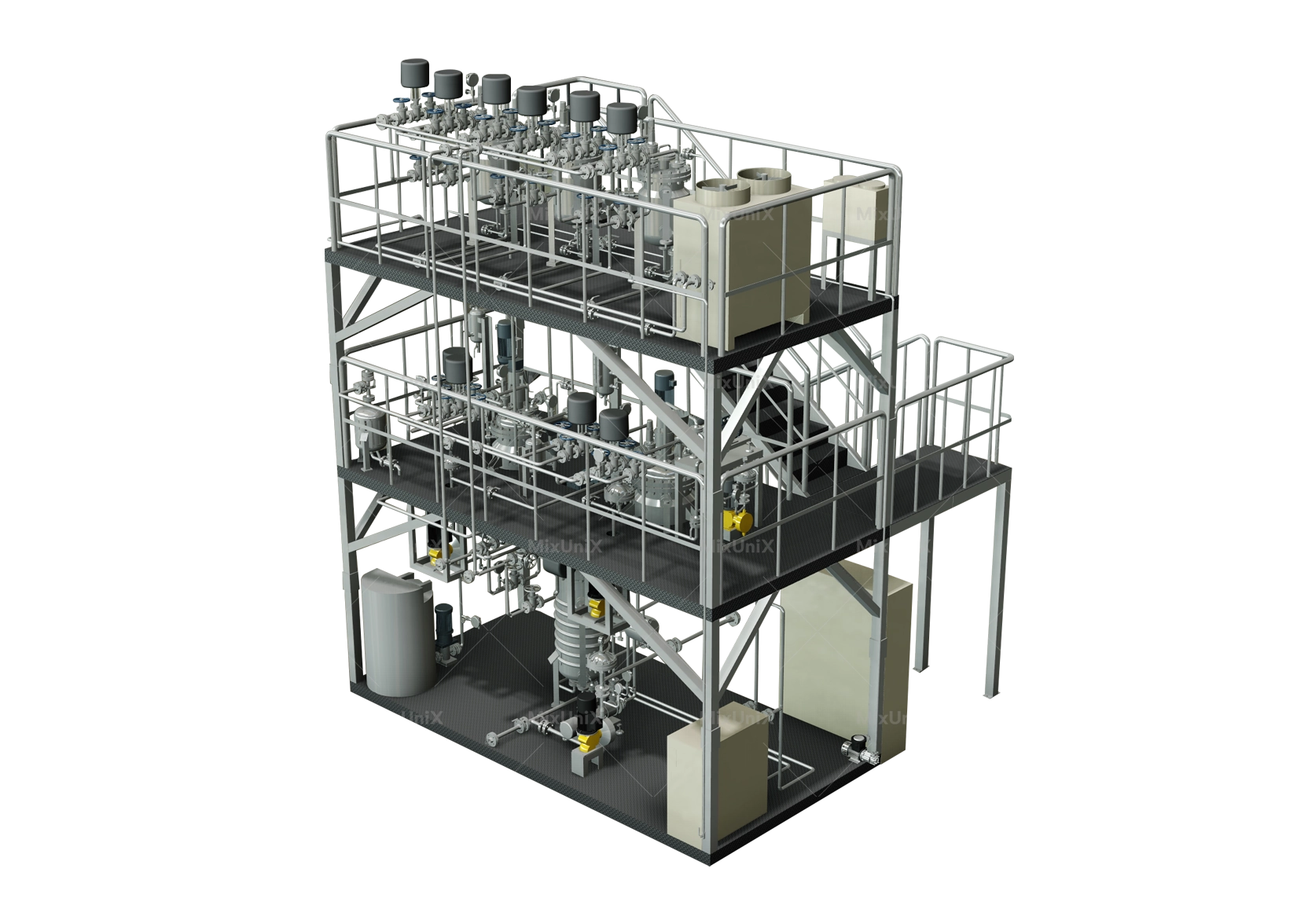
Biopharmaceutical and related bioprocessing applications may include microbial fermentation, cell culture, media/buffer preparation, and selected downstream operations. Typical products can include antibiotics, biologics, vaccines, enzymes, and other bio-derived products. In aerated bioreactors, the mixing system typically must provide gas dispersion, bulk circulation, heat transfer, and hygienic design; impeller staging, baffles, and sparger arrangement should be matched to vessel geometry and process load.

Key process metrics

  • Oxygen transfer: OTR must meet OUR, and kLa is commonly used as a key indicator of gas-liquid mass-transfer capability
  • Power input and shear: power per unit volume, impeller tip speed, and local energy dissipation should be selected according to organism or cell shear sensitivity
  • Aeration conditions: gas flow rate, superficial gas velocity, and gas holdup affect gas dispersion and oxygen transfer
  • Scale-up: criteria such as kLa, power per unit volume (P/V), mixing time, tip speed, superficial gas velocity, and heat transfer should be considered together

Industry challenges

  • Oxygen transfer vs. shear: higher speed or power input can enhance gas dispersion and oxygen transfer, but excessive shear may damage shear-sensitive organisms or cells.
  • Hygienic requirements: minimize hard-to-clean areas and product hold-up, and use surface finishes, welds, and sealing arrangements suitable for CIP/SIP or aseptic duty.
  • High-viscosity broth: mass transfer and circulation can deteriorate as concentration rises, requiring stronger bulk circulation and mixing.
  • Scale-up requires balancing oxygen-transfer capacity against shear level, with the matching criteria selected according to organism sensitivity.

Our Solutions

  • For aerobic fermentation, MixUniX can apply a multi-stage configuration with gas dispersion at the bottom, bulk circulation in the middle and upper zones, and foam control at the top when required:
  • Bottom: disc turbines (BTD / HDY / PY) for gas dispersion and oxygen transfer.
  • Middle and upper: wide-blade axial-flow impellers (KSX / KHX / ZCX / KCX) for bulk circulation and mixing.
  • Top: a foam breaker (XPJ) may be used where significant surface foaming requires active control.
  • High-viscosity broth: high-flow, low-shear circulation impellers to overcome the deterioration in mass transfer and circulation caused by rising viscosity.
  • Impeller diameter, number of stages, and impeller combination should be selected according to vessel aspect ratio, fill level, rheology, and oxygen-transfer demand.

Our Engineering Capabilities

  • Tip speed, power input, and impeller configuration are tailored to organism or cell shear sensitivity while balancing oxygen-transfer requirements
  • Capable of large fermenters in the thousand-cubic-meter class (largest single vessel 2,540 m³); maximum installed drive power 800 kW; long-shaft mixer systems over 20 m in length
  • Product-contact materials and surface finishes are selected according to hygienic, corrosion, and cleanability requirements; 316L stainless steel and double mechanical seals with appropriate support systems can be configured where aseptic duty requires them
Partners
Novozymes
DSM
CJ
Aurobindo
BCML
NHU
Cathay Biotech
Eppen
Fufeng
Meihua
Chemicals

Chemicals

Chemical processing covers a wide range of mixing duties, including fine chemicals, agrochemicals, dyes, silicon-based materials, and inorganic salts. Requirements span from low-viscosity blending to high-viscosity polymerization and from atmospheric to pressurized reactions; some processes also involve flammable media, corrosive fluids, and multiphase systems.

Key process metrics

  • Reynolds number and rheology: used to identify the flow regime and guide impeller and power selection; low-viscosity turbulent duties generally emphasize bulk circulation, while high-viscosity laminar duties require stronger close-to-wall circulation and wall renewal
  • Hazardous-area requirements: protection concept, equipment group/category, gas group, and temperature class should be selected according to the project area classification and applicable regulations
  • Seal selection: operating pressure and temperature, fluid volatility/toxicity, solids content, corrosivity, and containment requirements must be considered together

Industry challenges

  • Wide duty range: low-viscosity mixing and high-viscosity polymerization coexist in the same plant, so a single impeller type is hard to apply.
  • Explosion protection and sealing: flammable service requires motors and electrical equipment suited to the hazardous-area classification, together with an appropriate sealing arrangement.
  • Corrosive media: material selection must be based on actual chemistry, concentration, temperature, chlorides/salts, and erosion-corrosion conditions.
  • Heat transfer: strongly exothermic reactions need effective mixing to renew heat-transfer surfaces and help prevent local overheating.

Our Solutions

  • Axial-flow impellers (ZCX / YCK / XCK / YK) for low-viscosity blending, solids suspension, and heat-transfer duties where strong circulation is required.
  • Close-clearance impellers (MKS / KS / FKS / LD) for medium- to high-viscosity mixing, polymerization, and heat transfer; large impeller-to-vessel ratios are typically used, with final geometry selected for the impeller type and vessel.
  • Sealing: single, double, or other suitable sealing arrangements are selected for pressurized or containment-critical duties according to pressure, temperature, fluid properties, and safety/environmental requirements.
  • Explosion protection: motors and electrical equipment are selected to the applicable hazardous-area classification and certification requirements (e.g. ATEX / IECEx or local codes).

Our Engineering Capabilities

  • Covers the full viscosity spectrum from low-viscosity homogeneous mixing to medium/high-viscosity
  • polymerization, combining axial and close-clearance impellers as required
  • Seal arrangements for pressurized reactors are selected according to process conditions; hazardous-area motors are configured to the applicable area classification and certification requirements
  • Corrosive-duty materials may include 316L, 2205, 2507, titanium, or lined construction, subject to a process-specific compatibility review
Applications in the Chemicals
Pulp & Paper
Premium Paper, Tissue Paper,
Specialty Paper, Base Paper,
Calcium Carbonate
Fine Chemicals
Catalysts, Additives, Pesticides, Pharmaceuticals, Paints, Fine Chemicals
Coal Chemicals
Coal-based Chemicals, Coal Tar,
Coal Asphalt,
Coal-based Synthetic Ammonia,
Coal-based Natural Gas, Coal Slurry Tank
Silicon Chemicals
Chemical Silicon Products, Semiconductors, Polycrystalline Silicon, Silica Gel,
Silicone Oil, Organic Silicon
Basic Chemicals
Inorganic Acids, Titanium Dioxide, Bleaching Powder,
Hydrogen Peroxide (H2O2)
Fertilizers
NPK Compound Fertilizer,
Nitrogen Fertilizer, Phosphorus Fertilizer, Organic Fertilizer
Salt Chemicals
Chlorides, Hydroxides, Carbonates,
Brine Reaction Tank
Resins (Plastics)
POE, ABS, EVA, SBS, PE (Polyethylene), PP (Polypropylene), Photoresist,
Polyether Polyols, Biodegradable Plastics, PS (Polystyrene), PU (Polyurethane),
PEEK (Polyether Ether Ketone)
Rubber
Brominated Butyl Rubber, Butyl Rubber, Nitrile Rubber, Styrene Butadiene Rubber, Polybutadiene Rubber,
Chloroprene Rubber,
Ethylene Propylene Rubber,
Isoprene Rubber, Silicone Rubber
Fibers
PET (Polyester) Fiber, PI (Polyimide) Fiber, Aramid Fiber, PU (Polyurethane) Spandex, Viscose Fiber, Carbon Fiber
Petrochemical Raw Materials
Cyclohexanone, Adiponitrile, Caprolactam, BDO (1,4-Butanediol),
DMC (Dimethyl Carbonate),
MDI (Methylenediphenyl Diisocyanate),
PTA (Purified Terephthalic Acid),
TDI (Toluene Diisocyanate)
Oil & Gas Storage and Transport
Lubricants, Petroleum Asphalt, Gasoline, Crude Oil, Heavy Oil
Partners
DOW
DuPont
Huntsman
Axalta
SMI
NuStar Energy LP
Celanese
BASF
Henkel
Bayer
Covestro
Evonik
Ineos
Sika
Akzo Nobel
Arlanxeo
Hyosung
SABIC
Wanhua
SINOPEC
Water & Wastewater

Water & Wastewater

Water and wastewater treatment mixing commonly includes rapid mixing/coagulation, flocculation, neutralization, aeration, sludge handling, and chemical preparation, often in open atmospheric basins or large tanks. Each stage has a different objective, so rapid dispersion, low-shear flocculation, solids suspension, oxygen transfer, and bulk circulation should be evaluated separately.

Key process metrics

  • Velocity gradient G (reference ranges): rapid mixing is commonly about 300–1,000 s⁻¹, while mechanical flocculation is commonly about 20–70 s⁻¹. Final design values depend on detention time, water quality, chemical program, and mixer configuration. G represents mixing intensity; flocculation design is also commonly evaluated using GT (G × detention time). Too little mixing can limit particle collisions, while excessive mixing can damage flocs.
  • Power input should be calculated and verified from the target G value, liquid viscosity, basin volume, and mixer hydraulic efficiency
  • Rectangular basins should be evaluated using basin width, liquid depth, aspect ratio, hydraulic retention time, and required circulation to determine whether single or multiple mixers, submersible mixers, or side-entry arrangements are appropriate
  • Top-entry mixers on open atmospheric basins generally do not require a pressure-retaining vessel seal, but bearings, shaft sealing, and environmental protection still depend on the equipment type and service conditions

Industry challenges

  • Wide G-value span: rapid mixing and flocculation demand opposite shear levels, so different impeller types are needed within one project.
  • Floc protection: excessive shear during flocculation can damage flocs and impair settling, so low-shear, uniform-circulation mixing is preferred.
  • Large basins: sizes up to several thousand m³ require a balance between circulation and energy consumption, often with side-entry or submersible mixers.
  • Chemical dispersion: coagulants such as PAC require rapid, uniform dispersion, while polymer flocculants such as PAM should be protected from unnecessary excessive shear.
  • Stage-specific design: rapid mixing prioritizes fast dispersion, flocculation prioritizes low shear, and aeration prioritizes oxygen transfer and basin circulation; these duties should not be reduced to a single stepwise-decreasing mixing-intensity rule.
  • Aeration: oxygen transfer combined with in-basin circulation for long-term continuous operation.

Our Solutions

  • Rapid mixing / coagulation: axial or paddle-type impellers (e.g. ZCX / XCJ / XJ) can provide rapid dispersion, with final impeller and power selection based on target G and detention time.
  • Flocculation: KZL with a draft tube can establish a stable low-speed circulation loop and help limit floc breakage.
  • Neutralization / dosing: paddle or axial-flow impellers (XJ / XCJ) are selected according to reaction time, dosing method, and allowable shear.
  • Aeration: aeration impellers or aerating hyperboloid mixers (GMA), combining oxygen transfer with circulation.
  • Large basins: side-entry (CFJ) or submersible mixers (QJB) can provide basin-wide circulation, with layout optimized for energy use.

Our Engineering Capabilities

  • Impellers and power levels are matched to the process objective, target G value (where applicable), and detention time for each treatment stage
  • Complete mixing packages for large basins of several thousand cubic meters
Partners
Nalco
Ovivo
Suez
Veolia
Paques
Kurita
Samsung
Larsen & Toubro
CEEP
WBD
New Energy

New Energy

New-energy (battery material) processing includes cathode precursor synthesis, iron phosphate and other precursor processes, co-precipitation, solids-bearing slurry handling, and electrolyte preparation. Conditions vary widely by process, from acidic or corrosive slurries to liquid systems with stringent trace-contamination and cleanliness requirements. Mixing can affect suspension, local supersaturation, particle size and morphology, heat transfer, and batch consistency.

Key process metrics

  • Solids loading, particle size, solid-liquid density difference, and settling velocity: key factors governing suspension and circulation requirements
  • Tip speed and power input: selected according to solids loading, particle size, particle fragility, rheology, and allowable shear
  • Scale and scale-up: from laboratory/pilot units to large production vessels, with attention to mixing time, suspension uniformity, and mechanical shaft design
  • Corrosion and contamination control: pH, temperature, salt/anion chemistry, and impurity limits vary by process, so wetted materials require process-specific compatibility review

Industry challenges

  • Contamination control: trace-metal limits depend on battery chemistry and product purity requirements; wetted materials, fabrication, and cleaning must be controlled accordingly.
  • Corrosion control: acidic, high-salt, chloride-, or sulfate-containing services require material or lining selection based on concentration, temperature, and the actual corrosion mechanism.
  • Particle-size control: in precipitation and crystallization stages, mixing intensity and local mixing conditions can influence nucleation, particle growth, and size distribution.
  • Large vessels: as scale increases, bulk circulation, suspension uniformity, and shaft-system mechanical design become key scale-up considerations.
  • High solids loading: slurry viscosity rises, requiring stronger circulation to avoid particle deposition.
  • Co-precipitation control: pH, dosing rate, and local mixing conditions jointly influence nucleation, particle growth, and morphology and should be coordinated with reaction kinetics; mixing uniformity also affects metal-ion distribution and batch consistency.

Our Solutions

  • Axial-flow impellers: variable-cross-section propeller designs (ZCX / ZHX) for duties requiring high circulation, relatively low shear, and solids suspension.
  • Auxiliary: pitched-blade open turbines (YCK), disc turbines (ZDY) and paddles (PTJ), configured by stage.
  • Materials: 316L / 2205 / 2507, titanium, or lined construction may be used subject to process-specific corrosion and contamination requirements.
  • Sealing: the sealing and flush/barrier arrangement is selected according to pressure, solids content, scaling tendency, toxicity/volatility, contamination control, and maintainability.
  • Co-precipitation reactors: multi-stage turbine or axial-flow impellers may be used; low-shear impellers can be considered for ageing and washing stages.

Our Engineering Capabilities

  • Scalable design available from lab scale through full commercial production
  • Materials can include 316L / 2205 / 2507, titanium, or linings as required, with contamination-control measures matched to the specific battery chemistry
Partners
AE
Livent
Albemarle
LG Energy Solution
Neogen Chemicals
CATL
Ganfeng Lithium
Huayou Cobalt
Capchem
Tinci
Food & Beverage

Food & Beverage

Food and beverage applications include starch and sugar processing, edible-oil refining, fermented condiments, beverage blending, and food additives. Media range from low-viscosity aqueous solutions and oils to viscous or solids-bearing slurries. Typical mixing duties include blending, dissolution, suspension, heat transfer, and dispersion, with hygienic design and cleanability as key requirements.

Key process metrics

  • Mixing time and circulation performance: important design and scale-up criteria for low-viscosity blending and dissolution duties
  • Tip speed and shear: selected according to product sensitivity, dispersion/emulsification targets, and texture requirements rather than a single fixed range
  • Hygienic design: wetted materials, surface finish, welds, seals, and CIP/SIP capability are specified according to product and regulatory requirements

Industry challenges

  • Hygiene: food-grade materials and cleanable geometry to avoid residue and microbial growth.
  • Diverse media: from low-viscosity sugar solutions to viscous starch slurries, oils and solids-bearing slurries — impellers must be matched accordingly.
  • Energy: high-volume commodities make power consumption and running cost sensitive.
  • Heat transfer: refining and sugar-boiling duties need effective mixing to renew heat-transfer surfaces.

Our Solutions

  • Main impeller: variable cross-section propeller (ZCX) for large-volume duties requiring high circulation with low-to-moderate shear.
  • Auxiliary impellers: disc turbines (PDY) for dispersion duties; pitched-blade open turbines (MK) and paddles (XJ / XCJ) for different viscosity and circulation requirements.
  • Materials: 304 / 316L stainless steel may be used, with material grade, surface finish, and sealing selected for food-contact, corrosion, and hygienic requirements.
  • Design: cleanable, low-hold-up geometry, with CIP/SIP capability or maintainable/removable components as required by the process.
  • Energy: high-efficiency axial-flow impellers can help reduce specific circulation energy while meeting the required mixing duty.
  • Heat transfer: high-flow impellers renew the heat-transfer surface in refining and sugar-boiling duties.

Our Engineering Capabilities

  • Circulation and mixing design for large storage and process tanks up to 2000 m³ per vessel
  • Wetted materials and surface finishes configured for food-contact and hygienic requirements, including 304 / 316L stainless steel and cleanable geometry
  • Suited to low-viscosity sugar circulation, oil heat transfer and solids-bearing slurry suspension
Partners
Cargill
Bunge
CPM
GEA
Alfa Laval
AAK
Desmet
Wilmar
COFCO
Myande
Metallurgy & Mining

Metallurgy & Mining

Metallurgy and mining mixing centres on hydrometallurgical leaching, slurry agitation, nickel/cobalt electrowinning, rare-earth precipitation and metal recovery. Typical media are dense acidic slurries (reference density ≈ 1400 kg/m³) with high solids content and strong abrasiveness; tanks can reach several thousand cubic metres and operate continuously under high temperature, strong acid and high salinity.

Key process metrics

  • Slurry solids loading, density, particle size, and settling velocity: key factors governing suspension, circulation, and power requirements
  • Tip speed and power input: optimized to balance suspension performance, energy consumption, and impeller wear
  • Large vessels: as vessel diameter and liquid depth increase, shaft deflection, critical speed, dynamic loads, and nozzle/tank loads become key mechanical design considerations
  • Abrasion and corrosion: materials and wear-protection strategy must be selected from slurry particle size/hardness, process chemistry, temperature, and local velocities

Industry challenges

  • High solids suspension: dense, coarse particles are hard to suspend and demand high power.
  • Severe abrasion: continuous particle impact requires wear-resistant impellers and shafts.
  • Large shaft systems: long shafts require checks for deflection, critical speed, vibration, and dynamic loading, with stabilizing structures or intermediate supports used only where required.
  • Continuous duty: 24-hour operation demands very high reliability and maintainability.
  • Corrosion and high salinity: material or lining selection must be based on the actual leach chemistry, temperature, chlorides/salts, and erosion-corrosion conditions.

Our Solutions

  • Main impeller: variable cross-section propeller (ZCX) for slurry duties requiring high circulation and solids suspension.
  • Auxiliary: pitched-blade open turbines (YCK) and sweep-back types (HXL / FPJ), matched to different stages and wear requirements.
  • Materials: stainless/duplex stainless steels, titanium, linings, or wear-resistant treatments may be selected according to the corrosion and abrasion conditions.
  • Shafting: very large tanks require mechanical checks for long-shaft deflection, critical speed, and dynamic loads; multi-stage impellers, stabilizers, or intermediate supports are used only when required by the design.
  • Sealing: shaft-seal or sealing arrangements are selected according to vessel pressure, slurry solids, particle-ingress risk, containment, and maintainability.

Our Engineering Capabilities

  • Design capability for very large tanks: up to 15 m diameter, 18 m deep, and several thousand cubic meters per unit
  • Long-shaft systems are designed by controlling shaft diameter, span, impeller arrangement, and any required stabilizing/support structures to manage deflection, critical speed, and vibration.
  • Materials and wear protection are selected according to process chemistry and erosion conditions, including duplex stainless steels, linings, or hardened surfaces where appropriate.
Partners
Freeport-McMoRan
Compass Minerals
Masan High-Tech Materials
United Tractors
Tsingshan
Northern Rare Earth
XTC
CNMC
Baoti
Zijin Mining